Science · Pre-K to Grade 3–4
What do you notice?
Your child learns to look closely and ask a question.
A painted window fills the screen and your child taps what they notice: a bird, a gate, a watering can. The Pet notices too and asks a question, and each page goes into your child's nature journal.
- Pre-K to Grade 3–4
- 10 min
- Nothing to prepare
- On the screen
Free to sign up.
Is it a good fit?
- Ready if Your child can point at things in a picture and tell you what they see.
- Too much today? Start with What lives in the pond?: tap a painted pond and hear each thing named.
- Too easy? The Grade 3–4 level: flowers to count on two looks, and whether there are more or fewer.
What your child practises
- Noticing details
- Asking I wonder
- Spotting what is new
- Counting and comparing
“I wonder where its nest is.”
If your child says something like this, in their own words, the idea has landed. Finishing the rounds means they took part; this is the learning.
Your part
- Nothing to prepare for the screen
- Each question has a Read it to me button
- Plays alone, or you write down what your child says
Take it off the screen (optional)
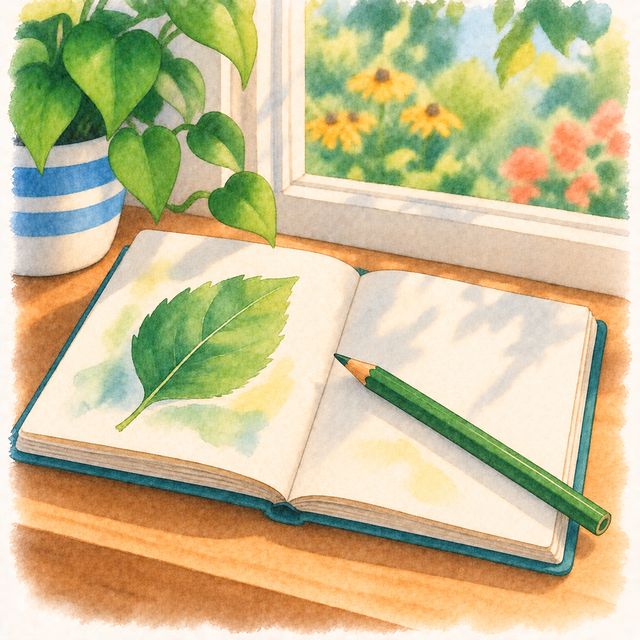
Keep a real journal: a notebook, a pencil and the same window every week, one thing drawn and one thing wondered.
More like this
The full design
What it is
A nature journal your child keeps with the Pet. One look out of the window, one thing noticed, one thing wondered, and the page goes in the journal. Nothing noticed is ever wrong. The habit this grows is the first one in science: look closely, say what you see, and ask a question about it. The Pet asks the questions and never answers them, so the wondering stays your child's.
How it goes
The Pet says "look" and the painted window fills the screen: a tree, a bird at its feeder, a hedge with a gate, a path, a watering can, a pot of flowers. Your child taps what they notice and hears the Pet notice it too; at K they pick a wonder; at 1–2 they hunt for what is new; at 3–4 they count and tap the number. Every tap on the picture gets an answer. The page lands in the journal under the picture, and after three the finish says what they did. Left mid-way, the game offers to carry on where it was, journal and all.
The Pet
Notices: "A bird, eating." Wonders: "I wonder where its nest is", and never says. Asks at 3–4: "which number is bigger?" Remembers at 1–2: "last time I looked, it was not there." Dares at K: bet your real window has something this one does not. If your child stops for a while, the Pet asks a question, then glows one thing, then taps it with them.
By band
Pre-K: tap anything in the picture; the Pet names it and wonders aloud. K: tap a thing, then choose a wonder about it from three. 1–2: the same window on a new day, and something is new (a second bird, a puddle, a butterfly): find it. 3–4: new flowers by the path to count, a second look with more of them, and the question "more or fewer?". 5–6 and 7–8 (weeks laid side by side, a wonder turned into a plan to test) wait for the real journal and play at the 3–4 rung for now.
What it grows
Science notebooks carry the inquiry from the first years of school, and nature journaling is the oldest way to learn to look. The screen here is a practice window; the learning is at the real one.
Done, and what counts as evidence
Done = three pages. What counts as evidence is the journal: what your child noticed, in their words, and the wonder beside it; at 3–4 the two counts and the comparison. The real journal, a drawing and a wonder a week, is the work sample you choose to keep.
What's personal
The painted window is the same for everyone; the real one is yours. The finish points at it every time: the garden, the park, the same spot each week. The Pet's wonders are its own, never facts about your child or your home, and nothing typed or photographed is kept. Naming species is not part of this game.