Science · Pre-K to Grade 1–2
What lives in the pond?
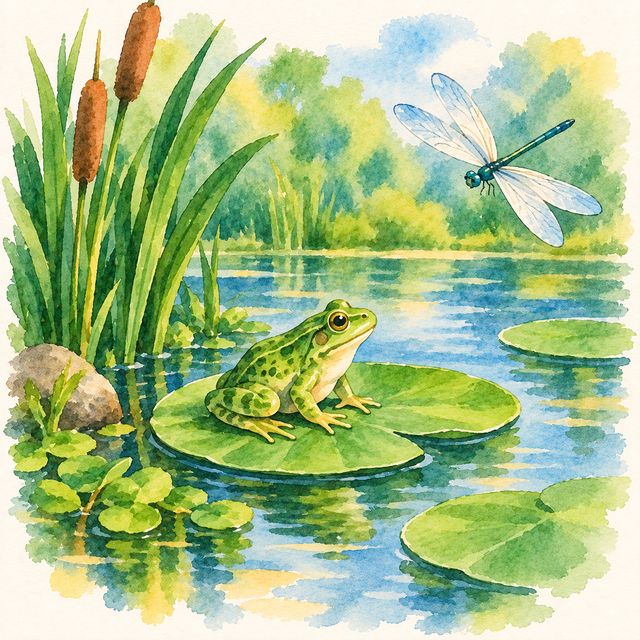
Find the pond's living things, and one true fact about each.
A painted pond holds a frog, a dragonfly, tadpoles, a duck and a water lily. The Pet gives a clue, and your child finds the living thing and hears one true fact about it.
- Pre-K to Grade 1–2
- 10 min
- Nothing to prepare
- On the screen
Free to sign up.
Is it a good fit?
- Ready if Your child can tap a picture and follow a clue like "something green is sitting still".
- Too much today? The Pre-K level: four things, each found from a clue.
- Too easy? The Grade 1–2 level: five riddles with no names, and a pond notebook line for each.
What your child practises
- Looking closely
- Naming living things
- Frogs start as tadpoles
- Wings, feathers, roots
“The tadpoles will turn into frogs.”
If your child says something like this, in their own words, the idea has landed. Finishing the rounds means they took part; this is the learning.
Your part
- Nothing to prepare
- Each question has a Read it to me button
- Plays alone: a wrong tap is named, never marked, and the Pet says where to look
Take it off the screen (optional)
If there is a real pond, puddle or ditch nearby, go and look for living things together.
More like this
The full design
What it is
One painted pond and five living things in it: a frog on a lily pad, a dragonfly, a shoal of tadpoles, a duck and a water lily. The Pet gives a clue, your child finds the thing by tapping it, and hears one true fact about it. Older children get riddles instead of names, and each answer is written into a pond notebook. This is looking closely, naming living things, a first life cycle (tadpoles become frogs), and sorting by what a thing has: wings, feathers, roots.
How it goes
The Pet asks and your child taps the pond. A wrong tap is named, never marked wrong ("that is the duck. Find the frog."), and the second miss says where to look. The right tap gets a tick, a ripple on the water, a hop sound for the frog, and the fact ("a duck's feathers keep the water off"). If your child stops, the Pet asks a question, then makes the right thing glow, then says where it is and waits: the tap stays your child's, and a card with a way on (an easier thing to find, or a pause) follows. A game left half way is offered back next time, with the things already found still ticked and the notebook kept.
The Pet
Asks the clue or the riddle. Notices the fact on each find. Remembers, on a later play: "you found the frog last time. Is it still here?" Dares (K only): one riddle with no name, the four wings, tried there and then.
By band
Pre-K: four things, each from a clue ("something green is sitting very still"). K: five finds and one wonder: what will the tadpoles turn into? That answer is the first notebook line. 1–2: five riddles with no names ("which one is covered in feathers?"), five notebook lines. After this game, Who lives here? takes the same looking outdoors to a real square of ground, and Grow it follows a real seed.
What it grows
Tap-the-thing with a glow after the instruction is the pattern the best preschool apps use; the science is the first-grade strand on what living things have and how young become parents (NGSS K-LS1, 1-LS1 and 1-LS3). The facts are the plain ones a picture book carries: tadpoles grow back legs first; a dragonfly has four wings, can hover and fly backwards; a duck's feathers shed water; a water lily is rooted in the mud.
Done, and what counts as evidence
Done = every thing found. The 1–2 notebook page, five answers found by looking, is a work sample; at Pre-K the evidence is the talk beside the screen: which one has wings, which one is a plant.
What's personal
Nothing beyond the plan's done mark and the notebook page, which the finish shows and the grown-up's note keeps. The lines in the notebook are what your child tapped, never typed.