Science · Kindergarten to Grade 5–6
Shadow tracker
Your child finds a pattern in the sky for themselves.
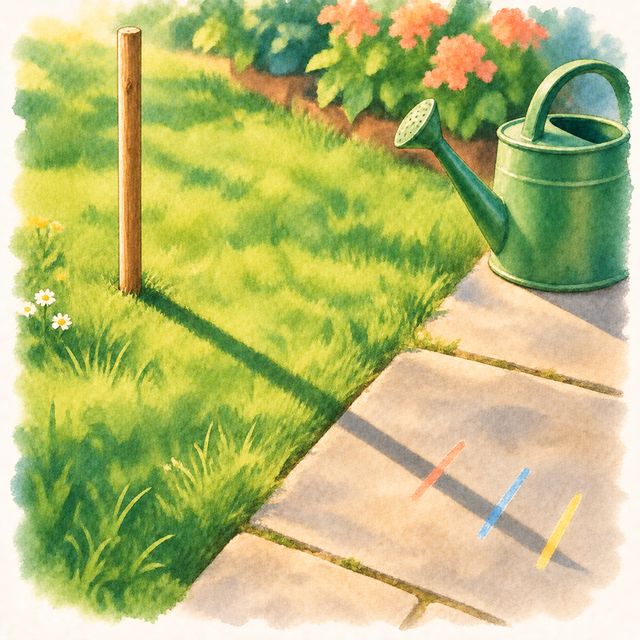
Your child picks one thing outside and puts a stone at the tip of its shadow in the morning, at lunch and in the afternoon. On the screen the three shadows sit side by side, and on another day your child says what they remember before last time's shadows are drawn behind today's.
- Kindergarten to Grade 5–6
- 2 min
- A kit
- On the screen
Free to sign up.
Is it a good fit?
- Ready if Your child can put a stone at the tip of a shadow and say which of two is longer.
- Too much today? Start with Weather window: one look outside, and a tap for what the sky is doing.
- Too easy? The Grade 3–4 level: guess the lunch shadow before going out, then measure it in centimetres.
What your child practises
- Longer or shorter
- Measuring in hand spans
- Guessing, then measuring
- Why the seasons change the shadow
“The shadow is shortest at lunch, when the sun is highest.”
If your child says something like this, in their own words, the idea has landed. Finishing the rounds means they took part; this is the learning.
Your part
- A stone or a chalk mark, a tape or a ruler from Grade 3–4, a torch and a ball at Grade 5–6
- Outside with your child at Kindergarten, alone from Grade 1–2
- Three two-minute visits to the same spot in one day, or one a week at Grade 5–6
Take it off the screen (optional)
Mark the same shadow again another day and see whether the same shape comes back.
More like this
The full design
What it is
Pick one thing outside, the swing, a fence post, a bottle on the step, and mark the tip of its shadow three times in a day: morning, lunch and afternoon. The shadow swings round and shrinks, then grows again, and the same shape comes back the next day. That is the first pattern in the sky a child can find for themselves, and later the one that explains why.
How it goes
The Pet reminds your child at the times you set. Out they go, put a stone at the tip of the shadow, and come back to the screen: tap longer or shorter, or count hand spans on a plus-and-minus. The screen draws the shadow on a picture of the day, with the sun where it is. At the third mark the three shadows sit side by side and the Pet asks what they notice. The next day the same three marks, with yesterday's drawn faintly behind them to compare.
The Pet
Asks: "where is the sun right now? Point at it!" and at lunch "is the sun higher than this morning?" Notices: "shortest at lunch, when the sun is highest." Remembers: the day before, drawn behind today's. Dares: "bet you can guess tomorrow's before we measure."
By band
K: after each mark, is the shadow longer or shorter than before? Two big buttons. 1–2: how long, in hand spans, and a chart of three marks a day for three days. 3–4: guess how long the lunch shadow will be before going out, then measure it in centimetres and see how close the guess was. 5–6: the same thing once a week across a season, and "why is it changing?" with a model: the Pet holds a torch, your child moves the ball that is the Earth.
What it grows
Patterns in the sky are the first science idea of the early years: what repeats, and when. A model with a torch answers a question a child has already asked, which is the only time a model teaches anything.
Done, and what counts as evidence
Done = three marks. The chart of the day is a natural work sample; the 3–4 guess and how close it came, and the 5–6 explanation with the torch and the ball, are observations a parent may keep.
What's personal
The thing is theirs and named in their words: the swing, the dragon tree, Grandad's post. The times are the family's day. The marks stay on the family's record.