Math · Kindergarten to Grade 3–4
Which one doesn't belong? Together
Maths talk on a call with someone who loves your child.
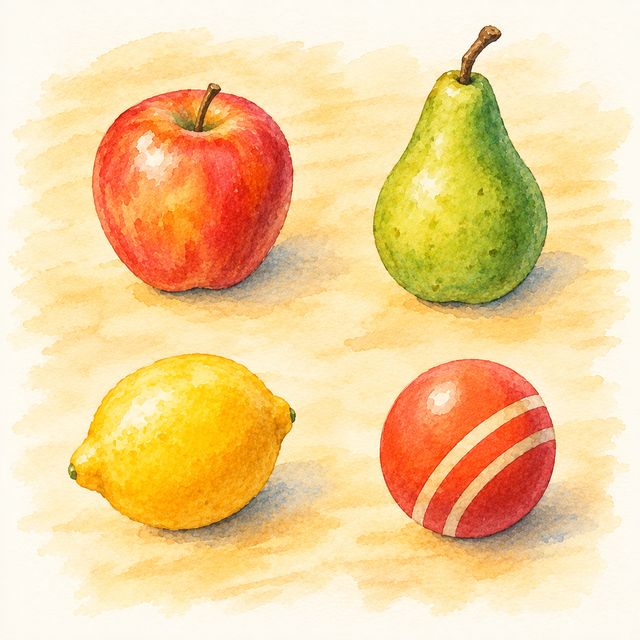
Your child plays on a call with a grandparent or another grown-up who can't see the screen. They describe the four things, each pick the odd one out and say why, then agree on one together.
- Kindergarten to Grade 3–4
- 10 min
- Kitchen things
- On the screen
Free to sign up.
Is it a good fit?
- Ready if Your child can name a shape or a number out loud and say one thing about it.
- Too much today? Start with Which one doesn't belong?: the same sets, played alone first.
- Too easy? The Grade 3–4 level: fractions and rows of dots, and your child writes one line saying why they picked theirs.
What your child practises
- Describing what you see
- Saying why
- Deciding together
“We picked different ones, and we're both right.”
If your child says something like this, in their own words, the idea has landed. Finishing the rounds means they took part; this is the learning.
Your part
- A phone or tablet, and a call to someone who cannot see the screen
- Each question has a Read it to me button
- Your child and one grown-up on the call: the Pet goes quiet while the two of them talk
More like this
The full design
What it is
Four things on the screen and a person on the phone who cannot see them. Your child says the four out loud, so the other person can play at all, then both of them pick the one that does not belong and say why. There is no wrong tile, so two different picks are two good reasons, and the last step is to choose one together. It is the game Which one doesn't belong? turned into a conversation: describing a picture for someone else, listening to their reason, and deciding as two people.
How it goes
The first screen asks who is on the call, by the names your family tree uses. Then a set: "tell Teta the four things on your screen", and a button for when they have. Your child taps their own pick, asks Teta for hers and taps that too, and the two picks sit side by side. If they match, the set is done. If not, each says their reason (at 3–4 your child writes theirs), then they talk and tap the one to keep, or your child can hand the choice to Teta on purpose. Three sets, then a finish that says how many were chosen together; at K the Pet offers one more.
The Pet
Asks "tell Teta the four things" and "now ask Teta", then goes quiet while the two of them talk: no hints while a card says ask or tell. Notices what they did, never who was right: "same one", "you changed your mind, that is allowed", "you let Teta choose, that is kind". It never guesses who is on the call and never picks for either of them. Dares (K): one more set.
By band
K: four shapes with one thing off, reasons said out loud on the call, nothing to type. 1–2: four numbers (the only even one, the only teen). 3–4: fractions and rows of dots, and before choosing your child writes one line saying why they picked theirs. Older children play the 3–4 sets.
What it grows
"Which one doesn't belong?" is a classroom routine because it has no single answer and lives on justification; done with a person who cannot see the picture it adds the describing, which is where the maths words come out. Deciding together after two reasons is the habit this grows: that two people can both be right, and still choose one.
Done, and what counts as evidence
Done = three sets chosen together. The evidence at K to 2 is what you heard on the call: the four things described well enough for the other person to pick, and a reason for the pick. At 3–4 it is the written line in the notebook, one per set they differed on. The best sign: a reason the other person could follow without seeing the screen.
What's personal
The person on the call is one of your own people, by the name your child uses. What goes into "My reasons" is what happened, in the child's words: who picked which tile, which one they kept, and at 3–4 the line your child wrote. Nothing in the notebook is put into their mouth.