Math · Pre-K to Grade 3–4
Which one doesn't belong?
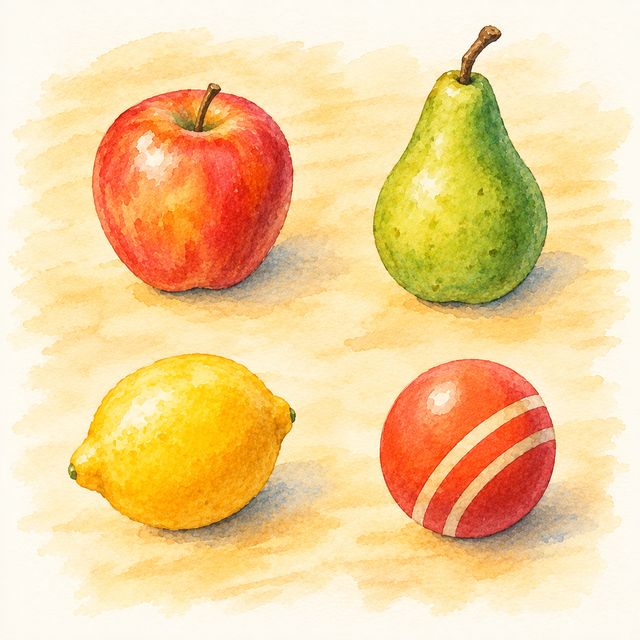
Your child looks closely and says why, in their own words.
Four pictures or numbers come up and your child picks the one that doesn't belong, then says why. Any pick is right if there is a reason, and the Pet gives a different reason of its own.
- Pre-K to Grade 3–4
- 8 min
- Nothing to prepare
- On the screen
Free to sign up.
Is it a good fit?
- Ready if Your child can point to a shape and say one thing about it: its colour, its size or its corners.
- Too much today? The Pre-K level: four shapes, with colour, size, corners and how many to notice.
- Too easy? The Grade 3–4 level: fractions as pie pieces, and dots in rows.
What your child practises
- Looking closely
- Saying why
- Shapes, numbers and fractions
“It's the only odd one.”
If your child says something like this, in their own words, the idea has landed. Finishing the rounds means they took part; this is the learning.
Your part
- Nothing to prepare or print
- Each question has a Read it to me button
- Plays alone, and even better with a grown-up who asks "why?": there is no wrong answer anywhere in it
Take it off the screen (optional)
Put four things from your own kitchen on the table and play the same game with no screen at all.
More like this
The full design
What it is
Four things on the screen. Your child picks the one that does not belong, and says why. Any pick is right if there is a reason, because the reason is the maths: it is bigger, it is the only blue one, it is the only even number. There is no wrong button anywhere in this game. What it grows is the habit of looking closely and putting a difference into words.
How it goes
The Pet asks which one does not belong. Your child taps a tile, then taps the reason that fits, from four offered, or says their own out loud. The Pet says what it noticed ("you looked at the colour"), takes a different tile and gives its own reason, then asks for one more. Four sets, two reasons from your child and one from the Pet in each, and every reason is written into "My reasons" on the screen. The sets, and the tiles in each, come in a new order each day.
The Pet
Notices the property your child used. Asks, and never says which tile is correct. When your child is stuck it reads out one reason and says which tile to tap. Dares (K to 1–2): "bet you can do the next ones up."
By band
Pre-K: four shapes, with colour, size, corners and how many to notice. K: four of the same shape with one small thing off each time (bigger, lighter, a dot, turned). 1–2: four numbers (the only even one, the biggest, the only teen). 3–4: fractions as pie pieces and dots in rows. Older children play the 3–4 sets for now; decimals, angles and expressions are the next sets to write.
What it grows
This is the "which one doesn't belong?" routine that maths classrooms use from kindergarten up, and number talks after it: the skill is justifying, and there is no single answer by design. A child who can say why is doing the maths; the picking is only the start.
Done, and what counts as evidence
Done = four sets with a reason each. The reasons list is the record, and it is the clearest window into how your child thinks that any game here offers: a child who says "it is the only odd one" without being asked is reading numbers, not just seeing them.
What's personal
The reasons are your child's, in the words they chose, kept on the screen for you to read after. Four real things from your own kitchen play the same game with no screen at all.