Math · Kindergarten to Grade 3–4
Measure me
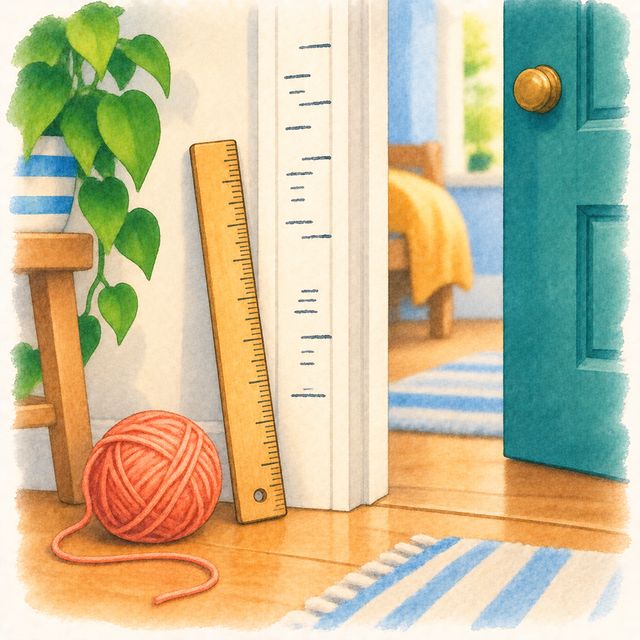
Hands, then string, then a tape: how tall is everyone?
Your child measures real things with their hands, then with a string as long as they are, then with a tape measure. They type in each number and compare, and at Grade 3–4 they put the whole family on one chart.
- Kindergarten to Grade 3–4
- 20 min
- Kitchen things
- On the screen
Free to sign up.
Is it a good fit?
- Ready if Your child can lay their hands flat one after another and count them.
- Too much today? The Kindergarten level: the table and a chair, measured in your child's own hands.
- Too easy? The Grade 3–4 level: everyone at the wall by name, a bar each on a chart, and how much taller the tallest is.
What your child practises
- Measuring with hands
- Which is longer
- Reading a tape
- A family chart
“The table took more hands than the chair.”
If your child says something like this, in their own words, the idea has landed. Finishing the rounds means they took part; this is the learning.
Your part
- A length of string, a tape measure or a ruler, and a pencil for the wall; a grown-up cuts the string
- Each question has a Read it to me button
- A grown-up at the younger levels, the whole family at Grade 3–4
Take it off the screen (optional)
Measure the door in hands tonight, or check the string against the door.
More like this
The full design
What it is
How tall am I in hands, in string, in centimetres, and how do I compare with everyone else in the house? Your child measures real things with their own hands first, then with a string as long as they are, then with the tape, and at 3–4 puts the whole family on one chart. The measuring happens in the room; the screen only takes the number.
How it goes
The Pet asks ("I am three apples tall. The table: how many hands?"), the screen shows what to do and a Measured it button, and the Pet waits quietly while your child is away measuring. Back at the screen, your child taps Measured it, then the number (a number pad to 20 for hands and strings, a digit pad for the tape). Any count is kept as your child said it. Which took more is asked from your child's own two numbers, and a wrong tap is answered with both numbers. At 3–4 a bar rises on the chart for each person, and the difference is one of four numbers built from your child's own readings. The finish says what was measured and never a height.
The Pet
Asks the question and then waits: while your child is measuring, no hints and no nudges. Says what it cannot see: if your child is stuck at the number, the Pet says "I cannot see your hands. Count, then tap the number", and never enters a number for them. Checks once when a tape reading is far outside a person's height ("Is that cm? People are about 90 to 190"), then keeps what your child said. Dares at K to measure the door in hands tonight, at 1–2 to check the string against the door, at 3–4 to guess a grown-up's arm span before measuring it.
By band
K: the table and a chair in your child's own hands, laid flat one after the other; which took more hands; "who is taller, you or the chair?" 1–2: a grown-up cuts a string as long as your child is tall; how many strings long is the room, and the table; then your child stands at the wall, a grown-up marks the top of the head, and the tape's number is tapped in. 3–4: everyone at the wall by name, a bar each on a chart, the tallest and the shortest, and how much taller the tallest is than your child, counted on. 5–6, when it is built: arm span against height for the whole family, and a guess for Grandma before she is measured.
What it grows
Children learn length by laying their own units end to end before a ruler means anything; the standard unit comes after the hand and the string, and a family is the first data set worth charting.
Done, and what counts as evidence
Done = one measuring: two things in hands and the taller question at K; two things in strings and the tape at 1–2; everyone, the order and the difference at 3–4. The chart at 3–4 is a work sample you keep by photographing the wall marks; the app keeps none of the numbers, by design.
What's personal
The people, by name, come from your family tree (two stand-ins when it is empty). The units follow your family: centimetres, or inches for a family that measures in imperial. No height is ever stored, not even to carry on later: the hands and strings counts come back after a break, but a 3–4 game picked up again at the chart stands everyone at the wall once more, and the Pet says why. The wall marks with today's date are the record.