Math · Kindergarten to Grade 5–6
Make the amount
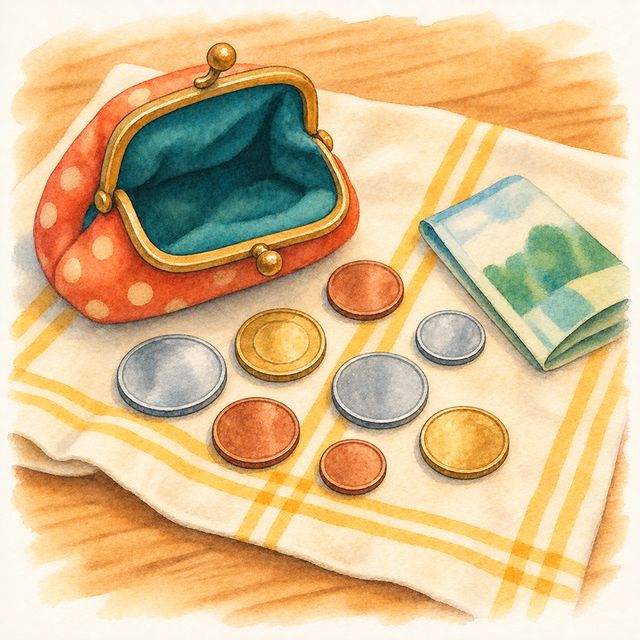
The same amount, made two ways with real coins.
The Pet names an amount and your child makes it with coins on a mat that counts up as each coin lands. Then they make the same amount a second way, and the two piles sit side by side.
- Kindergarten to Grade 5–6
- 10 min
- Kitchen things
- On the screen
Free to sign up.
Is it a good fit?
- Ready if Your child can tell your two smallest coins apart and count a few of them.
- Too much today? Start with Lemonade stand: at the youngest level, one coin a cup into the jar.
- Too easy? The Grade 5–6 level: the fewest coins when biggest-first does not work, and an amount shared into three purses.
What your child practises
- Making an amount
- Same amount, different coins
- Fewest coins
“Four quarters is the same as a dollar.”
If your child says something like this, in their own words, the idea has landed. Finishing the rounds means they took part; this is the learning.
Your part
- A handful of your own coins, and a note or two if you have them
- Each question has a Read it to me button
- Plays alone or with you nearby: too much or too little gets the count and a way on, never "wrong"
More like this
The full design
What it is
The Pet names an amount and your child makes it with coins, then makes the same amount again a different way. That second way is the whole lesson: two fives are a ten, four quarters are a dollar, and a big note is only a lot of small coins. Later comes "fewest coins", sharing an amount into purses, and how many small coins fit in a big amount. The real coins on the table are the point; the screen is the mat that counts them.
How it goes
The amount sits in a card at the top. Your child taps coins from the tray and they land on the mat, where a counting-up line grows as each one lands: "25 cents, 50 cents, 60 cents", never a sum. A tap on a placed coin takes it back. The count-it button checks the pile: too little or too much gets the count and a way on, never "wrong". Then a second mat opens beside the first for the same amount a different way, and the two piles sit side by side, equal. Three rounds, then a finish that says what was made.
The Pet
Asks the amount and, when the pile is short, "is that more or less?". Notices the equal piles: "two 25 cents, 10 cents, the same as six 10 cents." Remembers the last round's count and asks for fewer the second time. Dares a bigger amount, or a round with a coin banned, and at 3–4 the fewest-coins puzzle for when they are older.
By band
K: small amounts with the two smallest coins, made twice. 1–2: amounts up to about a dollar with the family's small coins, two ways, then "fewer coins the second time?". 3–4: notes and cents together ("make $3.45"), one round with a coin banned, and a count of how many ways two coins can make an amount. 5–6: the fewest coins when the biggest-first habit fails (the Pet brings a coin from its own country to make that happen), sharing an amount into three purses, and how many of the small coin make two dollars.
What it grows
Money is where equivalence first makes sense to a child: the same amount, different pieces. Making it with the hands, then making it again another way, is what turns "coins" into "amounts", and it is the standard second-grade content in every curriculum we checked. The game adds nothing the table does not: it only counts, and asks for the second way.
Done, and what counts as evidence
Done = three amounts made, most of them two ways. What counts as evidence is what you see at the table: a child who reaches for a bigger coin instead of counting from one, or who swaps four fives for a twenty without being told. The finish names it when the game saw it; the parent's own note is worth more.
What's personal
The coins and notes are your country's, drawn in your money's words (cents, pence, fils) and made only with amounts your coins can actually make. The counting-up line is the one your child says out loud at the table.