Math · Grades 3–4 and 5–6
Pizza fractions
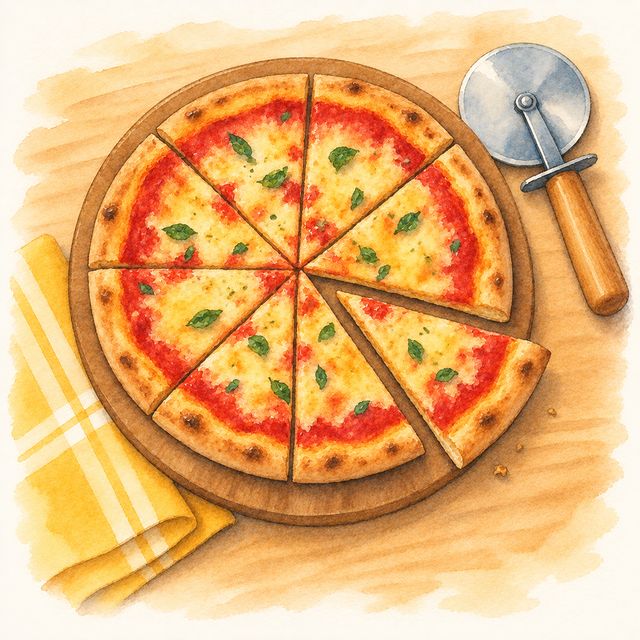
Fractions make sense, one slice at a time.
Your child taps the slices of a pizza that are being eaten, and a bar and a fraction fill in as they go. The last round asks which of three bars is the same share as three quarters.
- Grades 3–4 and 5–6
- 10 min
- Nothing to prepare
- On the screen
Free to sign up.
Is it a good fit?
- Ready if Your child can count slices to eight and knows what half a pizza looks like.
- Too much today? Start with Half for you, half for me: sharing out before the symbols.
- Too easy? The Grade 5–6 level: two pizzas cut differently, and what is left after the Pet eats three eighths.
What your child practises
- Parts of one whole
- Picture to number
- Same amount, cut smaller
“Six eighths is the same as three quarters.”
If your child says something like this, in their own words, the idea has landed. Finishing the rounds means they took part; this is the learning.
Your part
- Nothing to prepare or print
- Each question has a Read it to me button
- Plays alone: a wrong tap is never marked, the Pet says what is on the plate and your child tries again
Take it off the screen (optional)
Cut a real pizza, a round loaf or a paper plate into eighths, a grown-up holding the knife, and count the slices together.
More like this
The full design
What it is
One pizza cut into slices, and a fraction to build by tapping the slices you are eating. As each slice goes orange, a bar under the pizza fills the same way and the top number of the fraction counts along, so the picture, the bar and the number say one thing together. A fraction is not a strange pair of digits: it is a share of one whole thing, seen three ways at once.
How it goes
The Pet says "one pizza, four slices, tap the ones we're eating". Your child taps slices on and off; each tap fills a piece of the bar and moves the top number. Then Check. Too few or too many, and the Pet says how many are on the plate and what the top number asks for, and the missing or extra slice glows for a moment. Right, and the Pet says what that fraction means: "three of four, that is most of the pizza". The last round shows three bars and asks which one is the same as three quarters (the one cut into eighths, six coloured). Four rounds, then a finish that names the shares that were actually played.
The Pet
Asks: "look at how much is coloured, not how many pieces." Notices a miss without marking it: "that is six of eight, the top number says five." Dares at the finish: "bet you can cut a real pizza into eighths tonight." Remembers (5–6): the cut your child has just made comes back as the share the Pet ate, and is named as theirs, the same day only.
By band
3–4: build three fractions (three quarters, five eighths, two thirds), then pick which of three bars, cut into different numbers of pieces, holds the same amount as three quarters. 5–6: the same amount across two pizzas cut differently, "the Pet ate three eighths, how much is left?", and a round of its own on a strip of tenths, where the coloured part reads as a decimal.
What it grows
A picture, a bar and the symbol, all on one screen at the same moment, then the real pizza at the table, is the order that carries fractions from pizza to paper. Equivalence (the same amount, cut smaller) is the idea a nine-year-old's fraction work rests on; the pizza is the version they can check by eating it.
Done, and what counts as evidence
Done = four rounds. Nothing here is a mark: a slice tapped and untapped is thinking, not a mistake. What a parent may keep is one line: did your child say, at the table, that six eighths is the same as three quarters, in their own words?
What's personal
The dare goes home: a real pizza, a round loaf or a paper plate, cut with a grown-up and counted in slices.