Math · Kindergarten to Grade 5–6
Build my room
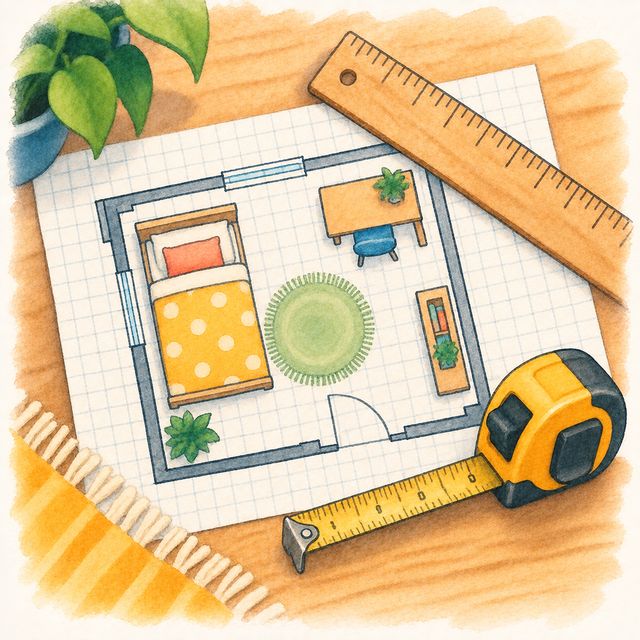
Your child measures their own room, and the Pet's room changes to match.
Your child measures real things in their room, like the desk in hand spans, and types in the number. The Pet's room on the screen stretches or shrinks to match, so a wrong number looks wrong straight away.
- Kindergarten to Grade 5–6
- 15 min
- A printout
- On the screen
Free to sign up.
Is it a good fit?
- Ready if Your child can lie down beside the bed and say whether it is longer than they are.
- Too much today? Start with Measure me: the same measuring with a table and a chair, one thing at a time, with no room to build.
- Too easy? The Grade 5–6 level: the whole room drawn on squared paper, one square a step, the bed drawn in, and how many blocks fill a box.
What your child practises
- Comparing lengths
- Hand spans, then a ruler
- Round the edge and the squares inside
- A room drawn to scale
“Your hand is bigger, so you needed fewer spans, but the ruler says the same.”
If your child says something like this, in their own words, the idea has landed. Finishing the rounds means they took part; this is the learning.
Your part
- At 5 and 6, be beside them to lie down, spread a hand and hold the ruler at its 0
- From 8, a floor tile or a sheet of paper folded square; from 10, squared paper and a box with some blocks
- Each question has a Read it to me button
Take it off the screen (optional)
Pin the drawing of the room on the wall, and measure the desk in hand spans again next month.
More like this
The full design
What it is
Measuring starts in the child's own room. Is the bed longer than the rug? How many hands wide is the desk? Later, how far round the rug, how many tiles it covers, and what the whole room looks like drawn small. Each real measurement changes the Pet's room on the screen, so a number the child took by hand becomes something they can see.
How it goes
The Pet asks for one thing, "how long is your desk, in hand spans?" Your child measures it for real, with you beside them at K and 1–2, and taps the number in. The same thing in the Pet's room stretches or shrinks to match, and the Pet asks "does that look right?" A wrong number is not marked; it just gives the Pet a bed the size of a bath, or a desk that goes through the wall, which the child sees at once and measures again. Only the sums your child works out from their own numbers are checked: how far round, how many squares, how much floor is left. Three or four measurements make a game.
The Pet
It notices the small things that matter: "you started at the 0 on the ruler." It asks "where did you start the ruler?" It remembers the desk from an earlier day: "your desk was 9 spans last time. Is it still?", and when the count is smaller it asks whether the desk shrank or the hand grew, so the child finds that hands grow and rulers do not. At 3–4 it says "you went round the rug, now cover it." Its dare is always the next step up: the bed in hand spans at K, all the way round the rug at 1–2, how many blocks fill a box at 3–4, and at the top a drawing to finish tonight.
By band
K: "is the bed longer than the rug?" Lie down beside each, tap the longer one; no numbers yet. 1–2: measure the desk in hand spans, then with a ruler, and see that the ruler's answer stays the same when a bigger hand tries. 3–4: how far round the rug, then how many floor tiles or squares it covers. 5–6: draw the room small on squared paper, every square a step, then how many small boxes fill a big one.
What it grows
Children learn measurement best by doing it with their bodies first, then with tools, then on paper, in that order. Moving in real space and building things by hand is one of the strongest known helps for later maths.
Done, and what counts as evidence
Done means three or four things measured. The drawing of the room at 5–6 is a work sample worth keeping; at the younger ages, a note in your words is the record: "measured the desk in hands, then checked with a ruler".
What's personal
All of it: the room is your child's, and the Pet's room becomes a little model of it. The measurements stay in your family's account and are never shared.