Science · Kindergarten to Grade 1–2
Sink or float?
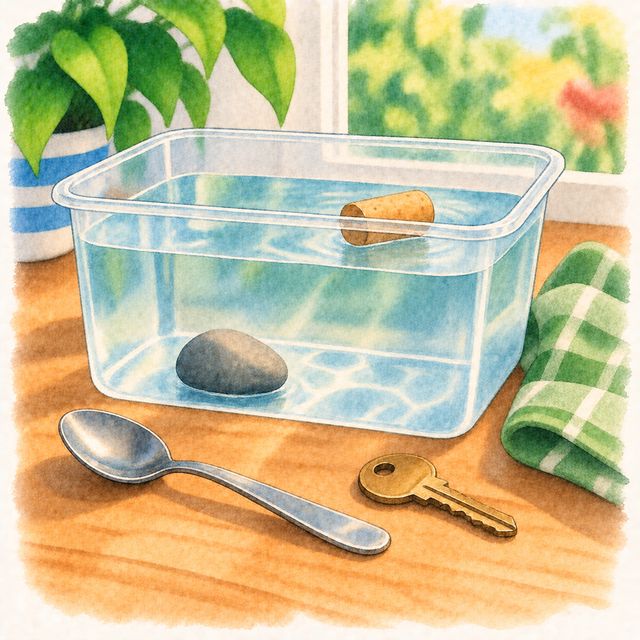
Guess, try it in real water, and see what happens.
Your child guesses whether each of five kitchen things will sink or float, then drops the real one in a bowl of water. They tap what happened, and the notebook keeps the guesses and the surprises.
- Kindergarten to Grade 1–2
- 10 min
- Kitchen things
- On the screen
Free to sign up.
Is it a good fit?
- Ready if Your child can drop a thing into a bowl and tell you whether it stayed up or went down.
- Too much today? The Kindergarten level: five things, one guess and one look each.
- Too easy? The Grade 1–2 level: after each thing, why did it do that, with three ideas to pick from.
What your child practises
- Guessing before trying
- Watching what happened
- Saying why
“I thought the cork would sink, but it floated.”
If your child says something like this, in their own words, the idea has landed. Finishing the rounds means they took part; this is the learning.
Your part
- A bowl of water, a towel and five things from the kitchen
- Each question has a Read it to me button
- Stay nearby while the water is out: a wrong guess is never marked
Take it off the screen (optional)
Take up the Pet's dare: look around the house for something that floats and sinks, and try it in the bowl.
More like this
The full design
What it is
Five things, one bowl of water, and a guess before each one goes in. Your child guesses, drops the real thing in, and tells the screen what the water did. A wrong guess is the best moment of the game: the water disagreed, and now there is a real question to talk about. This is the first shape of science: say what you think will happen, try it, write down what did.
How it goes
The Pet asks "will the wooden spoon sink or float?" and the spoon in the picture gets a ring so a child who cannot read yet knows which one. Your child taps Sink or Float, then puts the real spoon in the real water, and taps what it did. A copy of the spoon lands in the painted tub, floating or on the bottom, and the notebook writes the line. Five things, then a finish that counts the surprises. Tomorrow the five come in a new order.
The Pet
Asks: "hold it first: heavy or light?" Notices a surprise and celebrates it, never marks a guess wrong. At 1–2 it answers the child's idea with its own: "Wood floats. Even a whole log floats on a river." Dares (K): "bet you can find something that floats AND sinks."
By band
K: five things, a guess and a look each; the notebook keeps what the water did. 1–2: after each thing, "why did it do that?" with three ideas to pick from, and the Pet adds its own idea in a sentence a seven-year-old can carry to the dinner table.
What it grows
Predict, try and record is the pattern science learning rests on from the first year of school, and the surprise is where the learning is: a child who expected the cork to sink remembers why it did not. The habit this grows is cause and effect, said out loud.
Done, and what counts as evidence
Done = five things tried. What counts as evidence is the notebook: the guesses, what happened, and at 1–2 the reasons. One line worth keeping: which thing surprised them, and what they think now.
What's personal
The things are your kitchen's. A metal spoon sinks where the painted wooden one floats: the game asks what your spoon did and its ideas follow that, so nothing at home is ever "wrong". The notebook lines are your child's words.