Blog
Reading a storybook with Grandma, from her own home
Published 2026-09-30
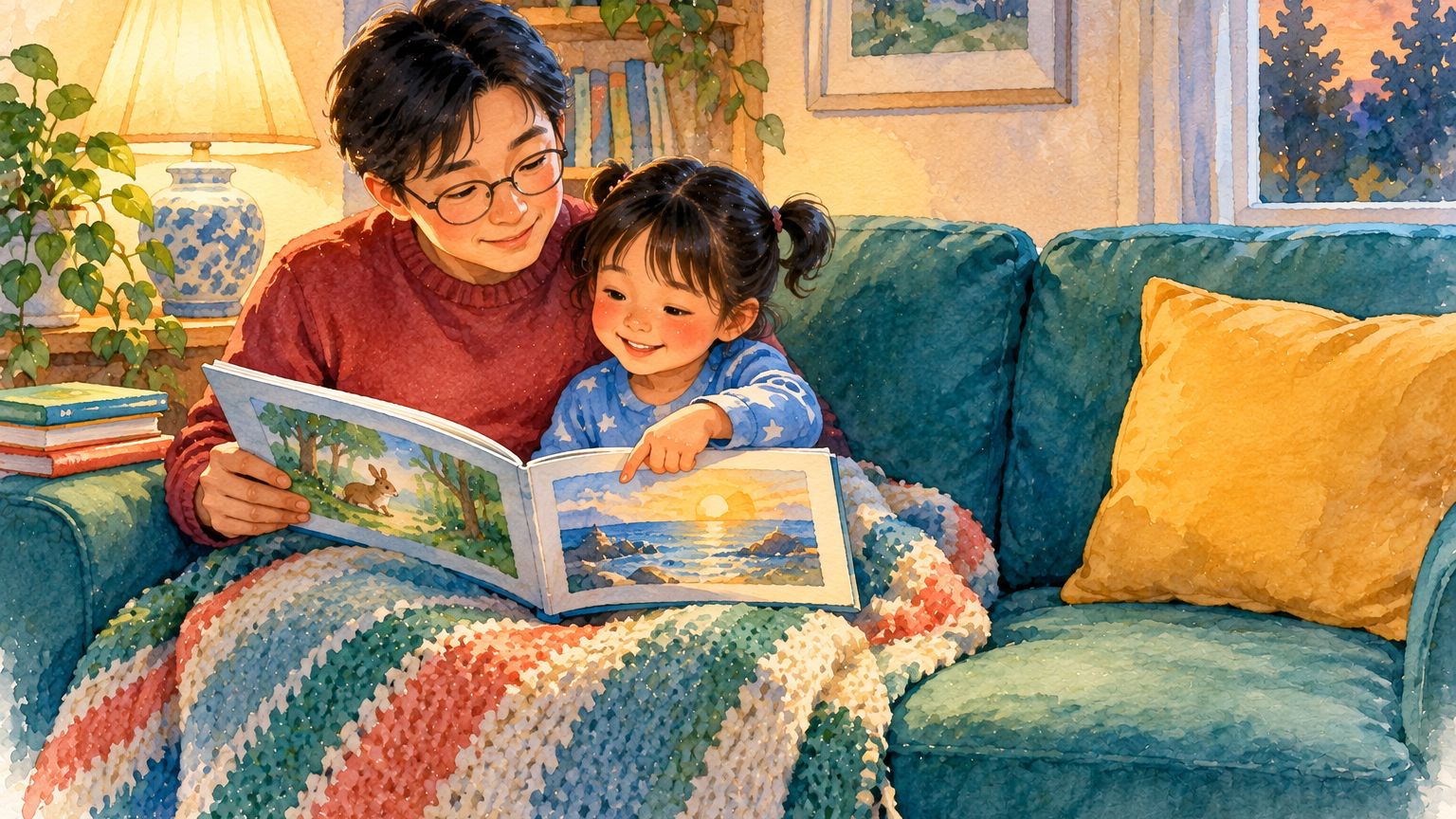
Many children have a grandparent who would love to read with them every week and lives too far away to do it. A video call helps, but holding a book up to a camera is hard work for everyone: the pictures are small, the child cannot turn the page, and the conversation drifts. MyEdora's storybooks were built for exactly this moment. This post explains how reading together works today, what the child does, what the grown-up does, and why reading this way is worth the effort.
A book where the child chooses
A MyEdora storybook is a picture book with choices. On some pages the story stops and asks a question, and the child picks what happens next from two painted cards. In *Where Is My Other Sock?* the question is where to look first: under the bed or in the basket. There is no wrong choice. Each one leads somewhere, and a curious child will want to read the book again to see the other way.
The first books are for Pre-K to Grade 2. *The Tallest Sunflower* is about growing a sunflower with Grandma, *The Kite on the Hill* is a windy day out, and *The Late Moon* is about waiting for the moon to rise. Each one is short enough for one sitting and long enough to talk about afterwards.
The child's Pet is in every book
Every child on MyEdora has a Pet they name and colour themselves. When a book opens, the child's own Pet appears on the page, in the scene, reacting to the story. When the child reads alone, they read to their Pet. When Grandma reads, the Pet listens along with them. It is a small thing that makes the book feel like theirs.
Grandma on her own device
Reading together works with each person on their own screen. Grandma opens the book on her tablet or phone at home; the child opens it on theirs; the pages move together. The child chooses at each fork, and the grown-up reading turns the pages. Nobody has to share a screen or hold a book up to a camera.
Getting Grandma there is one step. A parent invites her as a helper for that child, and when she opens the invitation it takes her straight into the reading. She sees only what the parent allows, for the child the parent chooses, and nothing else in the family's account.
What the grown-up does
Each page has a line for the grown-up reading: a question to ask, or something to point at. *Point to the sock. What colour is it?* *Wait for an answer. Ask why there.* These are small prompts, and they matter more than they look. Research on shared reading has found that when the adult asks questions as they read, children learn more words than when the story is only read to them. The prompts are there so that Grandma does not have to invent them on the spot.
After the last page
When the story ends, the Pet asks one question about it, and the book offers something to do next: a real activity that picks up where the story left off. After the sock book, that is Sock sort, pairing socks from the laundry basket. After *The Tallest Sunflower* it is Grow it, a bean on the windowsill and a daily look at what changed. After *The Late Moon* it is Moon diary, watching the moon change night by night. The reading is kept in the child's log with who read it, so a parent can see that Grandma read with them on Tuesday.
Getting started
If you are new to MyEdora, How it works walks through a whole week, and the guide to homeschooling with family help covers how to share the teaching with grandparents, friends and tutors. MyEdora is free, with no ads. Pick a book, send Grandma the invitation, and let the child choose where to look first.