Music & arts · Grades 1–2 and 5–6
My piece
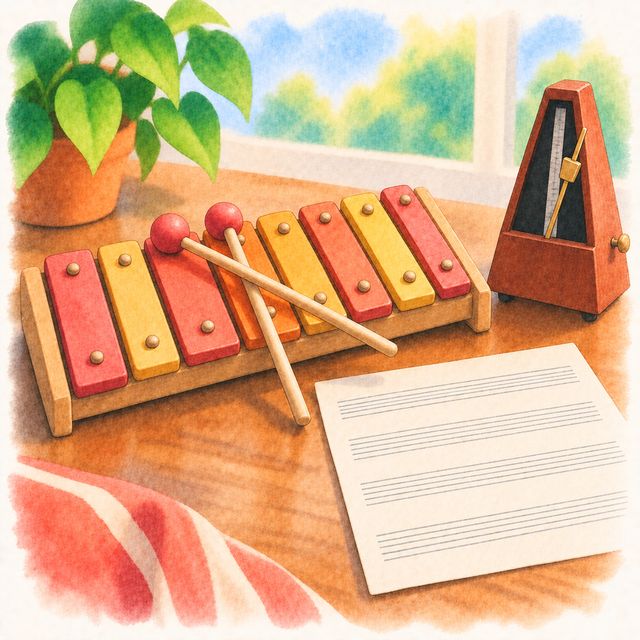
Practice that belongs to your child, with no timer and no streak.
Your child sets a goal for the tricky bit, then plays their real piece on their real instrument for as long as they like. Back at the screen they tap I practised and say how it went.
- Grades 1–2 and 5–6
- 5 min
- Kitchen things
- On the screen
Free to sign up.
Is it a good fit?
- Ready if Your child is learning a piece on an instrument, at any level.
- Too much today? At Grade 1–2 it is what today is for, the practice, and how it went.
- Too easy? The Grade 5–6 level: the tricky bar by its number, a way of practising that fits what goes wrong, and how it feels before and after.
What your child practises
- Sticking with a piece
- Finding the tricky bar
- Choosing a way to practise it
“Bar 6 was wobbly. I did it slowly, and now it's nearly there.”
If your child says something like this, in their own words, the idea has landed. Finishing the rounds means they took part; this is the learning.
Your part
- Nothing to set up
- Each question has a Read it to me button
- At Grade 1–2 be nearby while your child plays and chooses; at Grade 5–6 your child plays alone
- Nothing is recorded or timed
Take it off the screen (optional)
A performance for the family, which you can record as a milestone yourself.
More like this
The full design
What it is
Practice is a record, not a chore. Your child goes and plays their real piece on their real instrument, and taps once when they have: "I practised". No timer, no target, no streak, no "you missed". The screen never listens, times or records: it helps before and after, with a goal first and your child's own word on how it went. The Pet is a cheerleader and a rememberer, never a judge.
How it goes
A short stave on the screen shows the tricky bit ringed. Your child answers the question before, goes and plays for as long as they like (the screen waits and does not nudge), comes back and taps "I practised", then says how it went. At 5–6 the ways of practising are the ones teachers give (slowly then a bit faster, clap the rhythm first, that bar five times, start one bar before it); two fit each problem, and a way that does not fit gets a question about the problem your child named, never a mark.
The Pet
It says plainly that it cannot hear the playing, asks what today is for, and celebrates the practice as done. It never rates how it went: "better", "the same" and "still tricky" are all answered warmly. At 5–6 it remembers the bar and the two words your child gave it, and asks about them next time. Its dare at 1–2 is finding the exact bar with you; at 5–6, playing the tricky bar for a grown-up tomorrow, the slow way first.
By band
1–2: what today's practice is for (all the way through, the tricky bit, or just for fun), then the practice, then how it went in your child's own word. 5–6: the tricky bar by its number on the music (or "the tricky spot" when the music has no numbers), how it feels before, what goes wrong in it and a way of practising that fits, then the practice, then how the bar feels after, with the before beside it.
What it grows
Children keep practising when practice is theirs and nobody counts the minutes. Naming the tricky bar, what goes wrong in it and a way to practise it is how teachers turn repetition into progress, and hearing their own before and after, in their own words, is what makes the next practice worth starting.
Done, and what counts as evidence
Done means one tap: practised. At 5–6 the bar, the plan and the before and after are the observation worth keeping; a performance is a milestone you record yourself.
What's personal
The piece, the instrument and the music are your child's; the game names none of them and never invents a teacher or a recital. What the Pet remembers is only what your child told it (the bar and how it felt), which you can see and erase on the Pet page. Your family's own list of pieces, and a recording kept as a work sample, are later additions, not built yet. How long they played is a grown-up's note, if you want one; the app never times a child.