Math · Pre-K to Kindergarten
Snack count
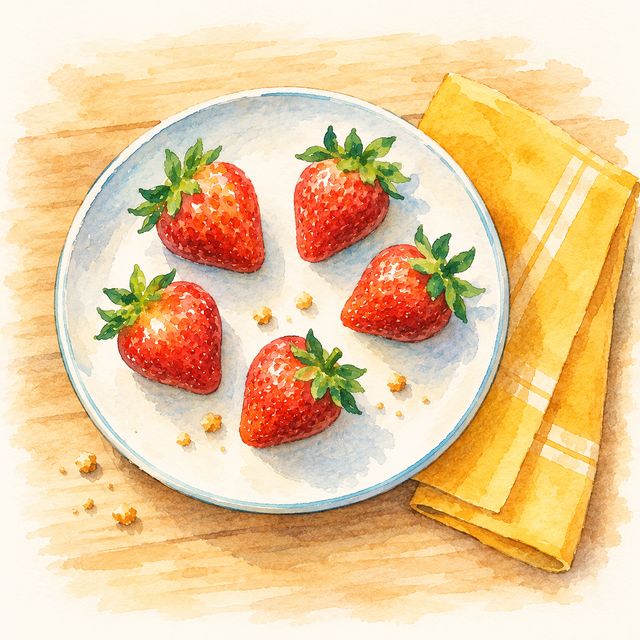
A number becomes an amount your child can hold.
The Pet is hungry and asks for a number of snacks. Your child counts that many onto its plate on the screen, then counts the same number of real snacks onto a plate for you.
- Pre-K to Kindergarten
- 10 min
- Kitchen things
- On the screen
Free to sign up.
Is it a good fit?
- Ready if Your child can say the numbers to five in order.
- Too much today? The Pre-K level: plates of one to five, on the screen and then for real.
- Too easy? The Kindergarten level: up to ten, one more than that, and how many are left after the Pet eats two.
What your child practises
- Counting out a set
- One touch for each number
- One more, and how many are left
“One, two, three. Three, so I stop.”
If your child says something like this, in their own words, the idea has landed. Finishing the rounds means they took part; this is the learning.
Your part
- A small bowl of a snack that comes in pieces, and a plate
- Each question has a Read it to me button
- A grown-up nearby: you watch the real plate and tap We did it
More like this
The full design
What it is
The Pet is hungry and wants exactly three. Your child counts three snacks onto the Pet's plate on the screen, touching each one as they count, and then counts three real ones onto a real plate for you. The point is the second part: a number is not a word to say but an amount you can make with your hands, and the screen's plate is only there to check.
How it goes
The Pet says "I am hungry. Three, please!" and the screen shows the number as a row of dots, so a child who cannot read a 3 yet still knows. Your child taps snacks from the bowl onto the plate (a tap, never a drag), taps one on the plate to put it back, and taps Done. Too many and the Pet counts along with them; too few and it asks for one more look. Then "now the real ones": three on the table for you, and you tap We did it. The Pet eats every one. Another day the numbers are the same and the snack is different.
The Pet
Notices: "you touched each one as you counted." Asks, when the child stops: the next snack in the bowl glows so they know where to tap, then it puts one on the plate with them. Dares (older rung): "bet you can give me one more than that."
By band
The younger rung: three plates of one to five, each on the screen and then for real. The older rung: up to ten; then "one more than that" with the plate already filled; then the Pet eats two off a full plate while your child watches and asks how many are left.
What it grows
Counting a set out, one touch per number and stopping at the last, is the first idea of number, and it is learned with real things a child can move, not with digits. The screen here does the least it can and the table does the rest.
Done, and what counts as evidence
Done = the plates of the day. What is worth keeping is not on the screen: whether your child touched each snack as they said its number, and whether they stopped at the right one. A photo of the real plate can go in as a work sample if you want one; nothing is written for you.
What's personal
The real snack is whatever is in your kitchen: the screen shows grapes, crackers or tomatoes, the table shows yours. The plate on the screen carries the Pet's name, the one your child gave it.