History · Grades 1–2 and 3–4
Then and now
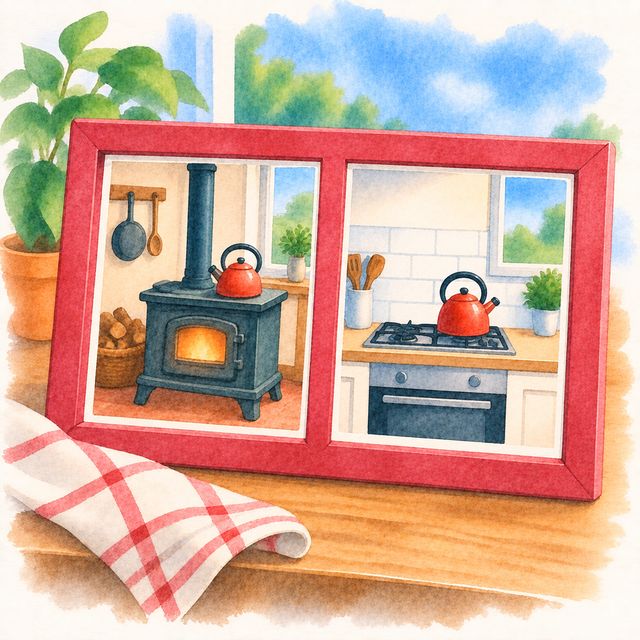
Some things change, some stay, and there is a reason.
Two paintings show the same kitchen, one from about 1950 and one from today. Your child finds what does each old thing's job now, what stayed the same, and why the rest changed.
- Grades 1–2 and 3–4
- 8 min
- Nothing to prepare
- On the screen
Free to sign up.
Is it a good fit?
- Ready if Your child can say what everyday things in your kitchen are for.
- Too much today? Start with When I was little: then and now, starting with your child's own life.
- Too easy? The Grade 3–4 level: find the three things that stayed, and choose why the fridge, the washing machine and the electric stove came.
What your child practises
- What changed
- What stayed the same
- Why things changed
“The icebox became the fridge.”
If your child says something like this, in their own words, the idea has landed. Finishing the rounds means they took part; this is the learning.
Your part
- Nothing to prepare or print
- Each question has a Read it to me button
- Plays alone: a wrong tap is named, never marked, with a grown-up nearby for the question at the end
Take it off the screen (optional)
Tonight, ask a grandparent or an older neighbour whether they ever used a thing from the old kitchen.
More like this
The full design
What it is
Two paintings of the same kitchen, one from about 1950 and one from today, one above the other. Your child finds what does the old thing's job now, then what stayed exactly where it was, then why the rest changed. This is history at its smallest and truest: things change, some things stay, and there is a reason.
How it goes
The Pet names a thing in the old kitchen and it glows. Your child taps the thing that does its job in today's kitchen. A wrong tap is named, never marked wrong ("That is the clock. Think about what the paper calendar was for."), and a tap on anything in either picture gets an answer. A right tap gets the fact ("The icebox held a block of ice; the fridge makes cold itself.") and a line in the child's notebook. The paper calendar's job is the phone's now, so the phone is the answer twice and the clock is the one thing in today's kitchen with no old partner. When your child is stuck, the Pet asks once, then makes the answer glow, then says it by name and waits for the tap (it never taps for them); the stuck card's easier way is the same question told: the answer in the words and glowing, and the rest of the game still to come. If the game is left half-way, it carries on from the same pair with the notebook kept.
The Pet
Asks before each pair: "Cold, with no plug. Find what does that job now." Notices the fact on a match. On the pick that mattered most it says its own pick and leaves your child's. Dares (1–2): "Bet someone you know used a thing from the old kitchen. Ask them tonight." A yes is written on the finish card, so you can ask who they asked.
By band
1–2: six things from the old kitchen (the icebox, the hand beater, the wall telephone, the washboard, the wood stove, the paper calendar), each matched to what does its job today, with one true fact each; then "which change mattered most?", where any pick is a fair pick. 3–4: the three things that stayed (the window, the kettle, the rug), tapped in today's kitchen, then why the fridge, the washing machine and the electric stove came: one reason of three each, the true one about what the new thing runs on.
What it grows
Change and continuity are the first historical ideas a child can hold, and a kitchen is the place they can hold them in: every object has a job, and the job outlives the object. Saying "the icebox became the fridge" is the seed of cause and effect in history.
Done, and what counts as evidence
Done = the six pairs found, or the three stayed and three reasons. Evidence is the notebook: which things were matched, which stayed, the reasons given, and the pick. One line worth keeping: what your child said mattered most, and why.
What's personal
The pick that mattered most is your child's and rides on the finish card. The question the game hands you is the real one: who in your family remembers a kitchen with any of these in it? Your own then-and-now photos are the next step, off the screen for now.