History · Grade 3–4 to Grade 7–8
Detective of the past
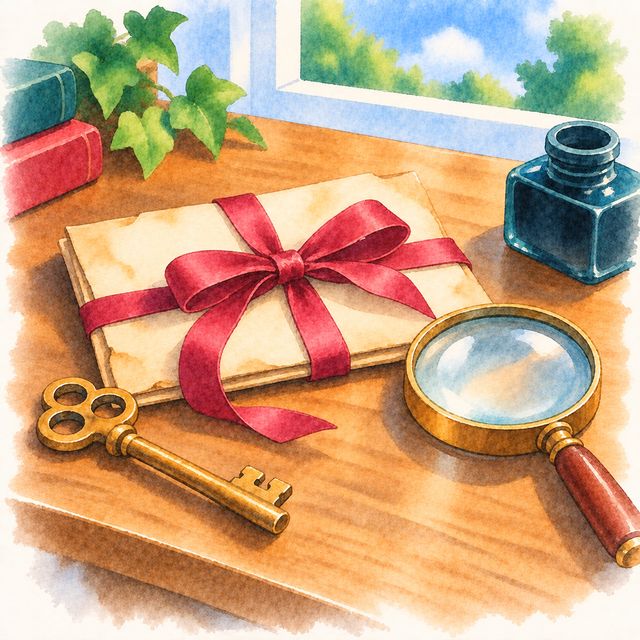
Look closely first, then say how you know.
An old object, a document, or two accounts of one school appear on the screen. Your child taps everything they notice, picks what it was for, says how they know, and writes one thing they wonder.
- Grade 3–4 to Grade 7–8
- 15 min
- Nothing to prepare
- On the screen
Free to sign up.
Is it a good fit?
- Ready if Your child can look carefully at a picture, say what they notice, and type one short sentence.
- Too much today? Start with Older or newer?: clues on everyday things, two at a time.
- Too easy? The Grade 5–6 level: a ration book page from 1943, who made it and what it never says. At Grade 7–8, two accounts of one school that disagree.
What your child practises
- See, think, wonder
- Evidence for a guess
- Who made a source
- Sources that disagree
“It was for pressing clothes, because the bottom is flat and smooth.”
If your child says something like this, in their own words, the idea has landed. Finishing the rounds means they took part; this is the learning.
Your part
- Nothing to prepare or print
- Each question has a Read it to me button
- Plays alone, or with you to talk it over
Take it off the screen (optional)
Find an old thing at home that nobody uses any more, and ask what it was for.
More like this
The full design
What it is
A historian's three questions, asked of one old thing at a time: what do you see? what do you think it was for? what do you wonder? Then the Pet's fourth question, the one that makes it detective work: how do you know? At eight the thing is an object; at ten a document; at twelve two accounts of the same school that do not agree, and the harder question of which to trust. What your child practises is looking before deciding, and giving evidence for a guess.
How it goes
The thing is on the screen with its name and date underneath. Your child taps everything they notice (each tap is a clue, said back to them), then taps Done looking. Then what it was for, from four ideas in a different order each day; a wrong idea gets a look-again question, not a mark. Then how do you know: the answer must be a part of the thing, and "it just is" is asked again. Then one wondering, typed in the child's own words into their casebook, which stays on the screen beside the thing. If your child is stuck, the simpler way drops the questions and keeps the looking and the wondering. At 7–8 the casebook holds the reason, and after the Pet's argument the child keeps or changes their answer, both right with a reason.
The Pet
It asks, above all: how do you know? who made it? what would someone else say? It notices what your child spotted ("the flat, smooth bottom; that is a clue"). At 5–6 it admits it does not know who set the ration amounts and asks where to look next. At 7–8 it argues against whichever source your child trusted, then accepts the answer either way. Its dare at 3–4 is to find an old thing at home that nobody uses and ask what it was for.
By band
3–4: an old object drawn on the screen (a flat iron, then a washboard, both from about 1900): tap what you see, choose what it was for, show the part that proves it, and write one thing you wonder. 5–6: a page from a British ration book of 1943: who made it, who it was for, and the thing it never says (why there was not enough food); then where a detective would look next. 7–8: a school inspector's report and a pupil's letter from the same school in 1905, one orderly and warm, one cold and frightened: which do you trust, and why; then the Pet argues the other side and asks whether you still think so.
What it grows
See, think, wonder is the routine museums and primary teachers use to slow a child down in front of a source, and asking for evidence is what turns a guess into history. Children of eight can source an object; by twelve they can hold two accounts that disagree and reason about who wrote each and why, which is the skill that later makes them careful readers of anything.
Done, and what counts as evidence
Done means one source worked through. The wonder lines are the record; at 7–8 the answer to "which do you trust, and why?" is worth keeping in your child's words.
What's personal
The casebook is your child's and stays on the screen for the session; nothing typed leaves the page. Every source is ours, drawn or written after the public record, never a photograph and never a real person's words. A family document of your own (a grandparent's letter) is a later addition, private to your family.