History · Pre-K to Kindergarten
My day in order
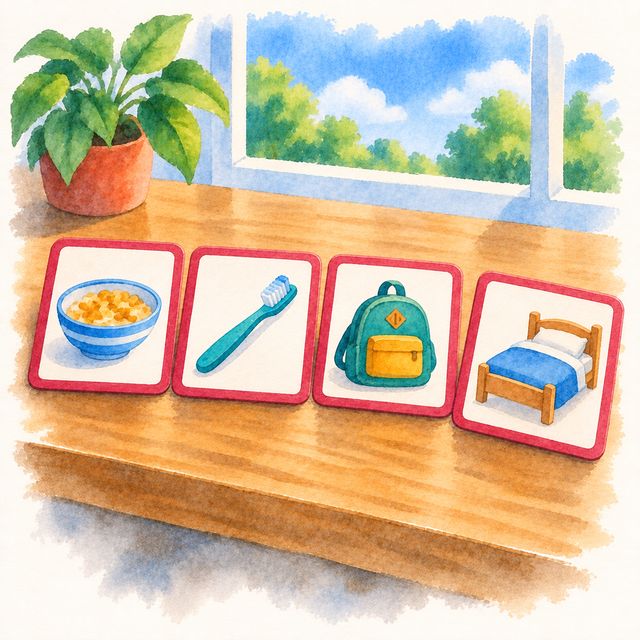
First, next and last, in the shape of their own day.
The Pet drops picture cards of your child's day in a muddle: waking up, breakfast, bed. Your child taps them back into order, and the day fills a strip like a little comic.
- Pre-K to Kindergarten
- 5 min
- Nothing to prepare
- On the screen
Free to sign up.
Is it a good fit?
- Ready if Your child knows the parts of their own day, like waking up, breakfast and bed.
- Too much today? The Pre-K level: three cards, wake up, breakfast and bed.
- Too easy? The Kindergarten level: five cards, then what comes before lunch, and whether yesterday had the park in it.
What your child practises
- First, next, last
- Before and after
- Pictures in order
“Breakfast comes before lunch.”
If your child says something like this, in their own words, the idea has landed. Finishing the rounds means they took part; this is the learning.
Your part
- Nothing to prepare or print
- Each question has a Read it to me button
- A grown-up nearby helps most on the first play
Take it off the screen (optional)
At bedtime, ask what came first today, and what came before lunch.
More like this
The full design
What it is
Your child's day, as picture cards the Pet has dropped in a muddle: wake up, breakfast, bed. Your child taps them back into the order they really happen, and the day fills a strip across the top like a little comic. This is the first history there is: first, next, last, and before and after. Nothing is read; the pictures say what each card is, and the speaker button says the question.
How it goes
The Pet says "Oops! I dropped your day. Put it back?" and the cards sit under an empty strip. Your child taps the card that comes first; it jumps to the strip with a number on it, and the Pet asks what comes next. A card out of turn is not called wrong: the Pet asks "hmm, what happens right after breakfast?" and the card goes grey until the right one is found. When the strip is whole the Pet names the day in order and walks along it, start to end. A long press on any card shows it big.
The Pet
Notices: "Wake up first. I put bed first, silly me." Asks on a slip: "the very first thing, when you open your eyes?" If your child stalls, the Pet asks again, then makes the next card glow, then places one card with them, and then offers you, a smaller deck, or a pause. On the yesterday question the Pet says "only you know your yesterday" and waits. Dares (K): "bet you can say your whole day out loud, first to last, no cards."
By band
Pre-K: three cards (wake up, breakfast, bed). K: five cards (lunch and the park join), then one question over the whole day, "what comes before lunch?", then a question only your child can answer: "did yesterday have the park in it?", with no wrong answer.
What it grows
Sequence is where history begins for a four-year-old: the order of their own day, then yesterday against today, then longer times. Ordering pictures they know, with "before" and "after" said out loud, is the step every later timeline stands on.
Done, and what counts as evidence
Done = one day put in order. What is worth keeping is not on the screen: ask at bedtime what came first today, and what came before lunch.
What's personal
The order is your child's own day, and the yesterday question is about their real yesterday, so either answer is right. Your own routine photos on the cards, and your family's words for them ("nap", "quiet time"), are designed and not built yet: the painted cards stand in.