History · Kindergarten to Grade 1–2
Family tree of names
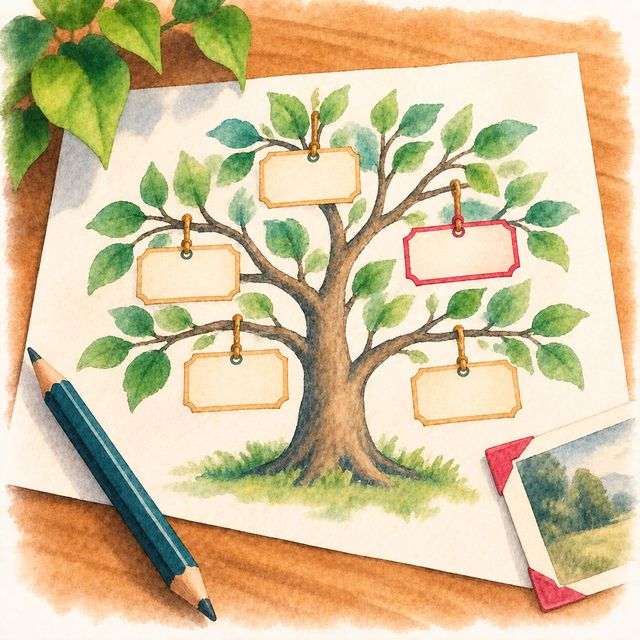
The people before your child, in order, by name.
Your family appears in rows, with the names your child uses: Mama, Baba, Teta. Your child climbs from themselves up to the oldest person, then picks a question to ask them.
- Kindergarten to Grade 1–2
- 15 min
- Nothing to prepare
- On the screen
Free to sign up.
Is it a good fit?
- Ready if Your child knows who their grown-ups are and what they call them at home.
- Too much today? The Kindergarten level: the rows, the oldest and one question, with no years and no reading.
- Too easy? The Grade 1–2 level: brothers and sisters join, and who was born first, from the years you entered.
What your child practises
- Generations
- Older and younger
- A question for the oldest
“Jiddo was born before Baba, who was born before me.”
If your child says something like this, in their own words, the idea has landed. Finishing the rounds means they took part; this is the learning.
Your part
- Add your people on the Family page first, by the names your child uses: the tree is private to your family, and the game only reads it
- Each question has a Read it to me button
- With a grown-up, or a grandparent on the phone
Take it off the screen (optional)
Let your child ask their question to the oldest person, in person or on the phone, and keep the answer.
More like this
The full design
What it is
You have grown-ups, they had grown-ups, and someone in the family was born first. The screen shows your own family, in rows, with the names your child actually uses (Mama, Baba, Teta, Nana). Your child climbs it: tap your grown-ups, then theirs, then find the oldest, and pick one question to ask that person about being small. This is the first shape of history: people before me, in order, and a question for the one who remembers the most.
How it goes
The Pet says "up we go, now your grown-ups" and the row to fill is outlined. Your child taps the people in it; a tap on the wrong row is told where that person is ("Jiddo is higher up, their row is next"), and a tap on themselves is "that is you, the bottom row". The rows fill from the bottom up, then "tap who is the oldest": the Pet answers a parent with "older than you, who is older still?" until the top row is found, and says the chain out loud: "Jiddo. Born before Baba, who was born before you." Last, the oldest person is ringed and four questions appear; any one is right. At the end the Pet dares your child to say the question out loud now, to that person if they are there or on the phone, or to a grown-up at the table, and asks how it went.
The Pet
Asks: "who was born first, of everyone here?" Notices each right tap by name and celebrates a full row. It never marks a tap wrong: a miss says where the person really is. At the question it says "ask Jiddo that next time you see them", and if the question was asked out loud, "now you know something". If the child leaves mid-game, the tree comes back as it was.
By band
K: the rows, the oldest, a question; no years, no reading needed (the read-aloud button reads every prompt). 1–2: brothers and sisters join the child's row; a year shows under an adult's name when you entered one, and the game asks who was born first of two adults from the years. A family that enters no years plays older and younger only, and that question is not asked. 3–4 (where everyone was born, a timeline) is written but not built yet.
What it grows
Living memory and the people in a child's own life are where history starts in the first years of school; generations and "born first means older" are the child's first ordering of time. The question to a grandparent is the hinge: a family story told once is remembered for years.
Done, and what counts as evidence
Done = the rows filled and the oldest found (or, with no tree, the words given). The evidence is the question your child chose, and whether they asked it: the finish says both. One line worth keeping: what the oldest person answered.
What's personal
All of it. The names are yours, entered by you on the Family page; a year shows only under an adult, only at 1–2, and never a date; a child in the tree never shows a year even if one was entered. The game reads the tree and writes nothing to it. A family with no tree yet plays two rows of the words the child uses at home (Mum, Mama, Baba, Teta, Jiddo and so on), nothing is stored, and the finish tells you where the tree is built.